
- 2 July 2025
No Storm Surge Here: Brisbane’s Budget Holds Steady for Investors
In the wake of ex-Tropical Cyclone Alfred, which brought Brisbane its wettest day in 50 years with over 420mm of rain in some suburbs and winds reaching up to 60 km/h, the city faced significant recovery challenges. Despite the extensive damage, including power outages affecting over 56,000 homes and businesses, Brisbane City Council has confirmed there will be no new cyclone recovery levy in its 2025–26 Budget.
A Measured Response to Disaster Recovery
Brisbane's decision stands in contrast to other councils, such as the Gold Coast, which have introduced special levies to cover cyclone damage. Instead, Brisbane City Council has opted for disciplined financial management, achieving a projected 10% budget surplus equivalent to A$400 million and reducing spending by A$470 million to safeguard against unforeseen events.
Support from Higher Levels of Government
The absence of a local levy is partly due to support from state and federal governments. The Disaster Recovery Funding Arrangements (DRFA), a jointly funded program between the Australian Government and state governments, provides financial assistance to support state governments with disaster recovery costs. Additionally, a $15 million Community Relief Fund was established to support Queensland communities in their clean-up efforts from Tropical Cyclone Alfred.
Implications for Property Investors
For property investors, the decision to forgo a cyclone recovery levy means greater financial predictability and stability. With no additional levies imposed, investors can maintain their financial planning without unexpected costs, making Brisbane an attractive option for property investment.
Interested in exploring property investment opportunities in Brisbane?
Contact us at enquiries@propertyclub.com.au to learn more.
Sources: Brisbane City Council Budget Summary 2025–26; Brisbane City Council's March 2025 Severe Weather Event Recovery; Disaster Recovery Funding Arrangements (DRFA) Factsheet; Community Relief Fund - 2025 Tropical Cyclone Alfred and Associated Rainfall and Flooding.
Related Posts

Kevin Young says ... it's time to make money...how! Why now?
Hi folks. It’s time to make money. Why? Because there’s fear in the market out there. Every day the papers are negative, negative, negative. Capital gains are going to be cancelled! Capital growth is going to be cancelled! You know what that does? It makes the average person stop like a bunny in the headlights of a...

Melbourne’s Inner West Is Still One of the Smartest Plays Right Now
There’s a pocket of Melbourne’s inner west quietly gaining momentum. Not the loudest market. Not the most hyped. But one that continues to show the kind of fundamentals experienced investors look for. And right now, it is sitting in a very interesting position. Location still does the heavy lifting This part of the...
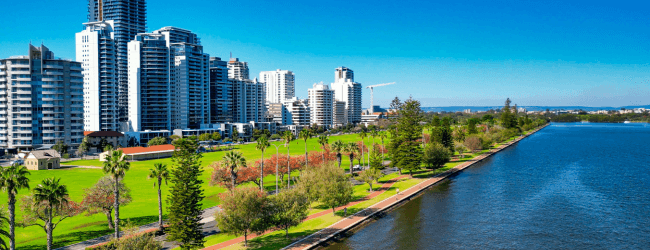
What Trees Tell You About a Property Market
Perth has just been recognised as a Tree City of the World for the third year running . Not exactly the kind of headline most investors chase. But it should be. Because this isn’t about trees. It’s about how a city is being run . The signal most investors miss Property markets don’t just grow because of population...