
- 12 February 2026
Adelaide’s Growth Curve Is Steepening
Adelaide has entered a new phase of its property cycle, and the data confirms it.
According to the Office of the Valuer General, the median house price in metropolitan Adelaide reached $925,000 in the December 2025 quarter. Twelve months earlier, it was $850,000. That represents a $75,000 increase in one year, supported by four consecutive quarters of growth throughout 2025. The median moved from $847,000 in March to $865,000 in June, $875,000 in September and then climbed strongly to $925,000 in December.
This is not a single-quarter anomaly. It reflects sustained upward pressure across the year.

The long-term trend places this movement into context. In the late 1990s, Adelaide’s median house price was around $120,000. Through the early 2000s, it rose steadily. Through much of the 2010s, the market consolidated. Since 2020, the curve has become noticeably steeper.
Markets do not shift trajectory without underlying structural drivers. South Australia has benefited from interstate migration, relative affordability compared to Sydney and Melbourne, defence and infrastructure investment, and limited housing supply. As values on the eastern seaboard surged past the million-dollar mark, Adelaide represented comparative value. That value gap has narrowed.
The strength is not confined to metropolitan Adelaide. Major non-metro towns increased from a median of $454,000 in December 2024 to $520,000 in December 2025. That is a $66,000 uplift across regional South Australia in twelve months. Growth has been broad-based.
For investors, this shift is meaningful. Adelaide has moved from being viewed as steady to demonstrating measurable and sustained capital growth. While it still offers relative affordability when compared to Sydney and Melbourne, the steepening curve suggests a market operating with renewed confidence.
A median approaching one million dollars changes perception. It reflects tightening supply, consistent demand and growing national attention. South Australia is no longer operating under the radar. The numbers show a market that has repriced and continues to strengthen.
For members wanting to understand how this phase of the South Australian market aligns with long-term investment strategy, contact Property Club at enquiries@propertyclub.com.au.
Source: Office of the Valuer General, Government of South Australia – Median House Sales by Quarter Data
Related Posts

Kevin Young says ... it's time to make money...how! Why now?
Hi folks. It’s time to make money. Why? Because there’s fear in the market out there. Every day the papers are negative, negative, negative. Capital gains are going to be cancelled! Capital growth is going to be cancelled! You know what that does? It makes the average person stop like a bunny in the headlights of a...

Melbourne’s Inner West Is Still One of the Smartest Plays Right Now
There’s a pocket of Melbourne’s inner west quietly gaining momentum. Not the loudest market. Not the most hyped. But one that continues to show the kind of fundamentals experienced investors look for. And right now, it is sitting in a very interesting position. Location still does the heavy lifting This part of the...
What Trees Tell You About a Property Market
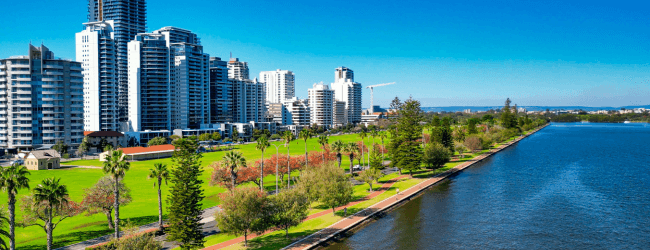
Perth has just been recognised as a Tree City of the World for the third year running . Not exactly the kind of headline most investors chase. But it should be. Because this isn’t about trees. It’s about how a city is being run . The signal most investors miss Property markets don’t just grow because of population...